


Ever wonder if your gadgets secretly call the shots? There's a whole world of hidden tech quietly working in the background to make your everyday routines feel effortless. Smart sensors and responsive devices adjust settings on the fly, all without drawing attention.
In this piece, we’re diving into three clever systems that transform your space into something more intuitive and comfortable. Stick around and discover how these behind-the-scenes tools subtly elevate your daily experience, almost like magic.
Invisible Technologies Overview and Definition
Invisible technologies are the smart systems quietly powering everyday gadgets like IoT devices, AI modules, and wearables. You know how sometimes technology just works in the background without you even noticing? That’s what these innovations do, they collect and analyze data in real time, subtly adapting our surroundings to boost comfort and efficiency.
Imagine a smart thermostat that learns your daily habits by tracking temperature, motion, and even biometric data. By combining tiny sensors, low-power microcontrollers, and efficient wireless protocols, these systems sense when you’re around and adjust settings without a fuss. It’s like your home is quietly fine-tuning itself to match your lifestyle.
Everyday examples include smart lights that brighten your space when you walk in, wearable devices that keep tabs on your health, and voice assistants that jump into action without needing a screen. They all work behind the scenes, processing data on cloud platforms to offer personalized responses without any extra effort from you.
In short, invisible technologies are designed to blend effortlessly into our routines. They make our environments smarter and more intuitive, helping us feel more at ease, whether at home or in the office.
Core Architecture of Invisible Technologies
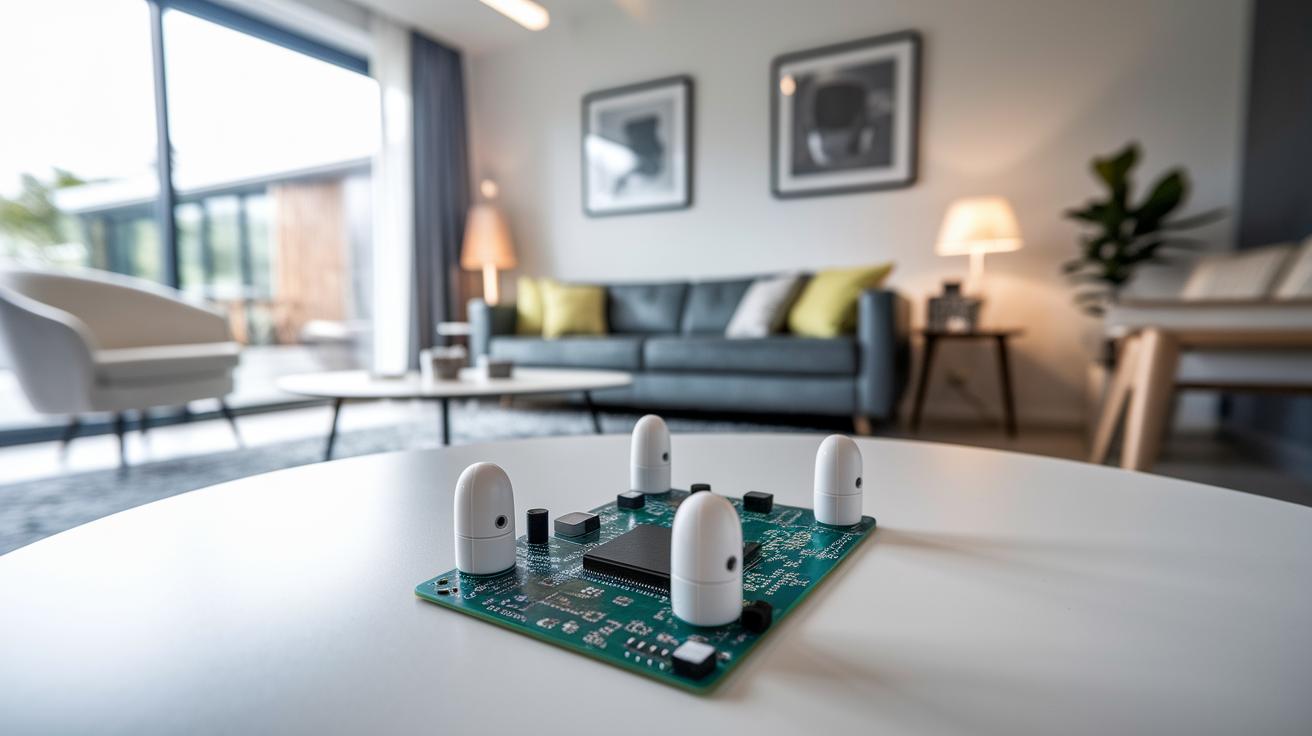
Invisible systems work through a blend of clever components that integrate effortlessly. At their heart are tiny sensors that capture everyday details like temperature shifts, movement, and even biometric signals, all without drawing any unnecessary attention. Think of a sensor quietly noting a room’s cooling trend or detecting a gentle shift in movement, blending into the background of daily life. These small yet vital sensors provide instant feedback that fuels responsive environments.
Then, there are low-power microcontrollers, like the ARM Cortex-M, that act as the brain of the system. They quickly process data from the sensors while using very little energy. Imagine a miniature computer that only springs to action when needed, keeping everything running smoothly without wasting power.
Wireless protocols such as Bluetooth Low Energy, Zigbee, and LoRaWAN help connect these microcontrollers to a larger network. They create low-energy, seamless channels for devices to exchange information rapidly, much like different parts of a building working together in harmony. For instance, a motion sensor on one end might signal a climate control unit on the other to adjust the temperature.
Edge computing modules add yet another layer by handling on-device AI tasks. These modules process data right where it’s collected, eliminating the need to send everything off to a far-away server. Imagine them evaluating biometric data and tweaking settings in the blink of an eye, almost as if the system can predict your needs.
Finally, cloud platforms tie it all together, gathering data from the sensors and microcontrollers for deeper insights. The cloud not only stores vast amounts of information but also runs analytics that help improve and personalize the system over time. This close connection between tangible devices and digital analysis is what transforms invisible technology into a practical, powerful tool.
Every piece of this next-generation system plays a critical role, creating an integrated ecosystem that enhances everyday life subtly and effectively.
Invisible Technologies in IoT and Smart Environments
Invisible technologies are quietly reshaping the way our environments respond to us. Picture walking into a room and seeing the lights adjust seamlessly, thanks to smart lighting systems like Philips Hue that use presence sensors to brighten your space when you're nearby. It’s as if your surroundings are anticipating your needs without any obvious hardware shouting for attention.
Predictive HVAC systems, such as the Nest Thermostat, are equally impressive. These devices learn your daily routines to fine-tune temperature settings for comfort and energy savings. Imagine a thermostat that intuitively adapts to your schedule, working silently in the background so you never have to think twice about adjusting your home’s climate.
Voice-activated assistants, like the Amazon Echo, take smart technology a step further by using far-field microphones to pick up your commands from across the room. With minimal visible intervention, your voice becomes the remote control for a network of interconnected devices, making complex operations feel as natural as chatting with a friend.
Then there are smart plugs, which monitor power consumption and seamlessly integrate older devices into modern energy management systems. They keep things discreet, preserving your space’s aesthetic while contributing to a more efficient, eco-friendly home.
Together, these innovative applications enhance our daily routines by merging technology with comfort and efficiency. With smart lighting, predictive HVAC, and voice-activated assistants working in harmony, our environments become more responsive and intuitive, quietly making our lives a little easier and a lot more connected.
Wearable Invisible Technologies and Human-Centric Applications

Imagine having a sleek piece of tech that quietly keeps track of your health as you go about your day. The Oura Ring, for example, uses a gentle infrared sensor to monitor your sleep and heart rate, giving you insights without feeling like you’re wearing bulky hardware. And with Google Soli radar, a subtle flick of your wrist lets you control your devices through tiny hand gestures, pretty neat, right?
Then there’s the Hexoskin smart shirt. It weaves sensors into the fabric to measure your breathing and movement, making it feel like your clothing is naturally part of your routine. This seamless integration means your everyday wear transforms into a smart manager of your well-being. Imagine getting a discreet alert if your heartbeat becomes irregular or watching your smart home adjust to your presence without any clunky devices in the mix.
These innovations show how technology can be both invisible and incredibly useful. By embedding sensors into what we already wear, designers have made it possible to track health metrics and even control devices with a simple gesture. It’s like having a personal assistant, quietly working in the background to help keep you on your best path.
Security and Privacy Considerations for Invisible Technologies
In 2023, Gartner noted a 50% jump in IoT security breaches. This shows that devices operating behind the scenes can attract savvy attackers. Without a visible user interface, hidden issues might slip by unnoticed. Imagine a system quietly running in the background with no obvious security flags, both users and administrators might miss an intrusion until it’s too late.
These covert devices can easily leave users in the dark. When a breach occurs, the lack of clear visual alerts means data might be stolen without anyone realizing right away. This challenge calls for strong defenses that protect both the device and the sensitive information it handles.
Here are some recommended safeguards for these modern, undercover systems:
- TLS encryption – a method that scrambles data during transfer so it stays secure.
- Secure boot – a process that ensures the device only runs trusted software from startup.
- Firmware digital signatures – a way to check that software updates and code are genuine.
- Micro-segmentation – a strategy to break down the device into smaller, secure sections to contain potential breaches.
Think of it like having a vault with several locks. For instance, TLS encryption and secure boot work together much like multiple locks protecting a vault, each enhancing the device’s security. Using these protections can significantly reduce risks, keep user data safe, and strengthen overall trust in invisible technologies.
Challenges and Trade-Offs of Deploying Invisible Technologies

Invisible systems open up exciting new possibilities but come with their own set of challenges. When you try to troubleshoot them, it can feel like you’re searching for the hidden beat in a silent symphony. Without a clear interface, pinning down issues is much like solving a puzzle in a room with dim light. And when devices shrink, the cost of crafting these compact, intricate components shoots up because advanced manufacturing is needed.
- Debugging hidden layers can miss critical details, like assembling a puzzle with missing pieces.
- As components become smaller, miniaturization and packaging costs rise, even if performance doesn't take a hit.
- Limited battery life means you often need to adjust power management, which interrupts continuous use.
- Merging with older systems demands creative, custom integration, somewhat like forcing together mismatched puzzle pieces.
Battery limitations frequently curtail performance during lengthy operations, requiring constant power management tweaks. Integrating modern technology with legacy systems often means engineers must think outside the box to blend the two seamlessly. Even a simple calibration turns into a careful process where every milliamp makes a difference. In the end, industries are tasked with balancing cutting-edge features against these trade-offs, pushing teams to innovate and engineer with precision.
Every design team faces this balancing act, weighing potential gains against technical constraints, and the journey requires both inventive thinking and careful execution.
Future Trends and Emerging Directions in Invisible Technologies
Imagine stepping into a space that adjusts to your needs almost before you even ask. Ambient computing, powered by context-aware AI (that is, software that senses and responds to what's happening around you), is making that dream a reality. Picture a smart office that tweaks its lighting and temperature based on your schedule and even your mood. At the same time, sensors that harvest energy from sources like sunlight or radio frequency signals are coming into play. These ingenious sensors pull power from their surroundings, cutting out the hassle of replacing batteries and keeping your tech running smoothly.
Then there are digital twin frameworks. These create real-time, virtual replicas of physical assets, kind of like having a dynamic mirror of the world, that help industries monitor and improve operations with remarkable precision. And let’s not forget haptic feedback networks. Instead of relying solely on physical buttons and switches, these networks let you feel subtle vibrations that confirm your actions on a device. It’s like having an invisible control panel right at your fingertips.
| Trend | Potential Impact |
|---|---|
| Ambient Computing | Intuitive, context-aware interactions that adjust to your every move |
| Energy-Harvesting Sensors | Sustainable, maintenance-free power solutions for discreet devices |
| Digital Twin Frameworks | Real-time, precise monitoring and optimization of physical assets |
| Haptic Feedback Networks | Invisible interfaces that bring a tangible, physical touch to digital commands |
These emerging innovations are setting the stage for a new era in our digital lives. They blend advanced technology with subtle, yet transformative, changes that could soon reshape how we interact with the world around us.
Final Words
In the action, this article unpacked invisible technologies from their basic definition to the intricate workings of sensors, controls, and wireless systems shaping smart environments. We examined how these systems operate in IoT devices and wearables, addressed security concerns and practical challenges, and peeked at future trends like ambient computing and energy-harvesting sensors. Invisible technologies promise smarter, more intuitive solutions that blend effortlessly into daily life and keep sparking fresh tech insights.
FAQ
Q: What do Invisible Technologies jobs involve?
A: Invisible Technologies jobs involve developing and maintaining systems that blend IoT and AI into everyday environments, offering roles in software engineering, system design, and technical support.
Q: How do Invisible Technologies remote jobs and invisible AI remote roles work?
A: Invisible Technologies remote jobs and invisible AI remote roles allow professionals to work from home, managing systems and projects related to smart devices and automation through online platforms.
Q: What do reviews on platforms like Glassdoor and Reddit say about Invisible Technologies, and is it a real company?
A: Reviews on Glassdoor and Reddit provide insights into employee experiences at Invisible Technologies, confirming it as a legitimate company with mixed feedback regarding its work environment and growth opportunities.
Q: Who is the CEO of Invisible Technologies?
A: The CEO of Invisible Technologies is not widely publicized; for the most current leadership details, checking the company’s official site or recent press releases is advisable.
Q: How many employees work at Invisible Technologies?
A: Employee numbers at Invisible Technologies suggest a lean, global team; for precise figures, refer to the latest company profiles or official communications.
Q: What is the salary range for an Invisible Technologies AI data trainer or AI trainer role?
A: The salary for an Invisible Technologies AI data trainer varies by experience and location, generally aligning with market rates in the tech and AI sectors based on role specifics.
Q: How can I access the Invisible Technologies login portal?
A: The login portal for Invisible Technologies offers secure access to company resources; employees should visit the official website and follow the provided authentication instructions.