


Ever considered that someone you trust might inadvertently put your data at risk? Insider threats aren’t just the stuff of movies, they can come from a long-standing employee, a former colleague, or even an external partner who has access to sensitive info.
Even a tiny mistake or a deliberate misuse of access could lead to a costly security breach. That’s why it’s crucial to implement proactive measures to catch any unusual activity before it spirals out of control.
In this article, we chat about the reasons behind these internal risks and how monitoring user activities can serve as your early warning system, helping you stay one step ahead of potential dangers.
Understanding Insider Threats in Cyber Security
Inside threats come from within an organization. They’re risks created by trusted people, whether it’s current employees, former staff, or even third-party providers who have proper access. Sometimes it’s a deliberate misuse during a workplace clash; other times, it’s a simple mistake that ends up exposing sensitive data. Imagine a well-intentioned technician accidentally sending access credentials to the wrong person, that unexpected slip can lead to a data leak. This is why it’s crucial to keep a close eye on internal risks and understand personnel behavior.
Organizations face different kinds of insider threats. There are those who intentionally cause harm, a set who team up with outside bad actors, accidental errors by someone who made a mistake, and breaches that occur because of external vendors. Data shows that internal sources are behind 60% of security incidents, and the financial hit from these threats jumped by 40% from 2019 to 2023. It’s no wonder 82% of CISOs are seriously worried about these human-driven risks.
Companies that stress strong corporate ethics invest in thorough monitoring to catch unusual activities quickly. This means setting strict access controls, based on what your job requires, and using real-time alerts that flag any odd behavior. Essentially, by carefully watching how users behave and reviewing data access patterns, security teams can spot potential issues even before they become big problems.
In truth, early detection is key. Experienced professionals often notice when user trends start to stray from the norm. By enforcing clear boundaries and regularly checking up on user activity, businesses can cut down the risk of internal breaches and keep their systems much more secure.
Detecting Insider Threats in Cyber Security: Indicators and Techniques

Keeping an eye on employee actions can be tricky, especially when they’re using their normal access rights. Early warning signs might be subtle but are essential to notice. Think of unusual behavior, misuse of access, unexpectedly large data downloads, or attempts to access systems without proper permission. For example, if someone suddenly starts pulling sensitive data way beyond what their role requires, it might slip by at first but could point to a potential risk.
Tools like user activity monitoring systems and behavioral analytics help establish the standard work routine. Once those patterns are set, any deviation lights up a warning signal. Imagine an employee who typically logs in during the day suddenly clocking in multiple times at night while transferring a burst of data, this red flag sends a clear message to security teams to look closer using automated systems.
Modern, real-time threat monitoring employs AI-driven solutions to catch these irregularities. These smart systems consistently check endpoint activities and offer a full incident response. In plain terms, AI can spot suspicious behavior, like an unusual file transfer, and alert teams immediately to stop a potential breach before any sensitive information gets out.
Investigators also rely on digital forensic techniques to dig deep into these flagged events. They use advanced tools to review suspicious file transfers and odd login attempts, all within an integrated monitoring framework. This blend of proactive detection and swift forensic review gives organizations the upper hand, drastically reducing the time an insider has to misuse their access.
Insider Threat Incidents and Their Impact on Cyber Security
When a trusted insider either deliberately sabotages or accidentally slips up, the fallout can be steep. Take the CashApp incident in 2022, for example, where a departing employee purposely exposed around 8 million customer records. One insider's mistake can put millions of sensitive details at risk, throwing an organization into disarray. Such stories really shine a light on just how vulnerable companies can be.
An obvious case is Tesla in 2023. Two employees leaked the personal information of over 100,000 current and former staff members, along with sensitive crash data. And then there's Boeing in 2017, where one employee inadvertently shared a spreadsheet containing social security numbers for 36,000 individuals. Both examples show that whether it’s intentional misconduct or a simple error, the result can be a massive data leak that looms over digital security.
In May 2022, Yahoo found itself in hot water when a research scientist downloaded roughly 570,000 pages of proprietary data. This misuse of unauthorized credentials led to a major security breach that didn’t just risk corporate trade secrets but also shook the trust in internal systems. Similarly, Reddit experienced a breach in June 2023 when an employee fell for a phishing scam, exposing user emails and login histories. It’s a clear reminder that even the best-trained teams can occasionally fall prey to crafty schemes.
All of these examples point to a concerning trend: insider errors, whether intentional or accidental, are a serious threat to data security. They highlight the need for robust behavioral analytics and digital forensic techniques that can quickly detect and address insider incidents before they spiral into full-scale breaches.
Managing Insider Threat Risks with Advanced Frameworks

Strong access control is the first step in guarding against insider risks. Companies start by immediately revoking access when an employee leaves and by enforcing a strict "only what you need" policy. This smart strategy not only prevents accidental data leaks but also cuts down the chance for any misuse.
Then there’s the role of thorough auditing. Regular security audits alongside cross-department reviews help spot hidden vulnerabilities and subtle shifts in behavior. Automated risk scoring tools evaluate these alerts, giving extra weight to actions that stray from the normal pattern. For example, if someone unexpectedly downloads a large batch of sensitive data, the system flags it right away.
Organizations usually layer several risk management strategies. Key elements include:
- Advanced risk management frameworks that bring together multiple security tools.
- Incident management workflows that standardize how to respond quickly.
- Digital trust frameworks that build a strong foundation for ongoing security.
Constant monitoring and multifaceted risk analysis let teams adapt as roles and technologies change. This combined approach uses regular IT governance reviews and strategic risk plans to measure insider threats accurately and guide effective responses.
| Strategy | Description |
|---|---|
| Access Control | Immediate revocation and strict least-privilege enforcement |
| Risk Scoring | Automated evaluation to prioritize insider threat alerts |
| Audit Practices | Cross-departmental reviews and IT governance assessments |
Preventing Insider Threats in Cyber Security: Best Practices
Organizations can protect themselves from insider threats by combining robust technical safeguards with a consistent, security-first mindset. Think of it this way: a misconfigured access control is like leaving your front door open in a busy neighborhood, a small oversight that can invite big trouble. By using tools like multi-factor authentication, data loss prevention, and zero trust segmentation (essentially treating every access request with caution), you set the stage for a secure system that encourages safe habits on every device.
When it comes to data, security isn’t just about what happens when it sits still, it’s also about its journey. Whether your data is traveling between systems or simply resting in storage, employing encryption (imagine it as a secret code that locks your information away) and secure file-sharing protocols keeps it safe. Picture your data like a cherished diary: when protected by the right encryption, it stays as private as a locked journal. And in our mobile work environment, robust endpoint protection and clear mobile device policies ensure that every remote connection remains secure.
But technology alone isn’t enough, people are at the heart of every security plan. A well-crafted security awareness program, with training modules and simulation drills (think of them like digital fire drills), helps everyone spot suspicious activities before they escalate into a breach. These drills not only build confidence but also create a culture where each team member feels ready to act when the unexpected happens.
Continuous improvement is key. Regular risk-awareness campaigns and updated guidelines for remote work, secure file sharing, and mobile protocols keep security at the forefront of everyone’s mind. It’s like tuning a classic instrument, consistent care and attention ensure smooth, reliable performance when it matters most.
Key initiatives include:
- Implementing multi-factor authentication and data loss prevention strategies
- Conducting regular simulation drills to reinforce secure behavior
- Establishing clear guidelines for remote work with solid VPN and endpoint protection
- Rolling out ongoing training that emphasizes secure file sharing and mobile device protocols
Together, these proactive measures not only cut down on insider risks but also cultivate a resilient, alert workforce ready to handle any challenge.
Responding to Insider Threats: Case Studies and Expert Advice
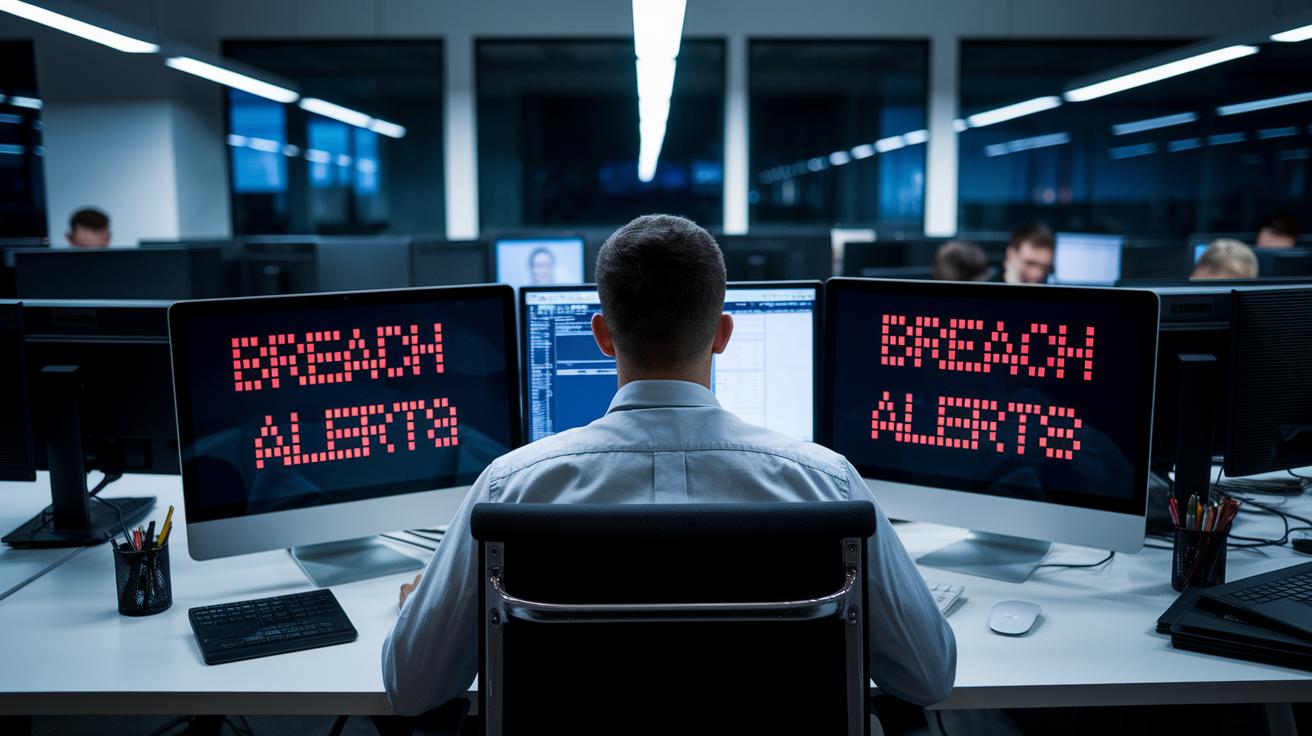
When an insider threat shows up, every second is critical. Imagine someone inside your organization slowly pulling out data, and your response team waiting just a bit too long, those extra moments can turn a contained problem into a full-scale breach.
Quick action isn’t optional. Companies that run realistic drills and bring various teams together are much better prepared when real incidents occur. One firm even simulated a breach response and discovered that a slight delay let a malicious insider transfer additional data. That drill was a game changer, helping them fine-tune their procedures and proving just how vital speedy intervention can be.
Using an integrated platform that combines AI-powered detection with practical risk mitigation guidance can make all the difference. These systems don’t only flag potential problems; they provide clear, actionable steps to jumpstart your response.
Plus, having a risk-transfer strategy in place, covering up to $3 million for insider incidents, ensures you’re guarded against both technical glitches and financial setbacks. In the end, a well-coordinated breach response plan and regular, realistic drills are your best bet for staying ahead of threats and keeping your organization's defenses strong.
Final Words
In the action, we've examined how insider threats in cyber security influence modern organizations. The post outlined risk factors from trusted individuals, discussed key detectors like unusual activity, and reviewed real incidents. It also detailed best practices to manage such threats and shared expert advice for effective response planning. Using proven frameworks and reliable monitoring strategies empowers organizations to protect their data confidently. Keep testing your systems and embrace proactive measures to stay ahead in tech security.
FAQ
What are the types of insider threats in cyber security?
The insider threat in cyber security is typically split into intentional and unintentional categories, including malicious insiders who exploit access and negligent insiders who cause harm accidentally, along with cases involving collusive or compromised third-party actions.
How can one prevent insider threats in cyber security?
Preventing insider threats involves implementing stringent access controls, regular security audits, user behavior monitoring, and ongoing training programs, which together help detect suspicious activity and reduce risk across the organization.
What are some examples of insider threats?
An example of an insider threat is when a trusted employee intentionally exfiltrates sensitive information, as seen in incidents where departing staff leaked customer data or inadvertently shared proprietary files through phishing scams.
What do cyber security statistics reveal about insider threats?
Cyber security statistics indicate that about 60% of data breaches are linked to insider actions, underlining significant financial and operational impacts due to internal vulnerabilities within organizations.
What does insider threat cyber awareness mean for 2025?
Insider threat cyber awareness in 2025 emphasizes recognizing that even trusted individuals can pose risks, prompting organizations to update monitoring, access protocols, and training to address emerging internal security challenges.
What are the five and seven types of cyber security threats?
A common five-tier list features insider threats, phishing, malware, ransomware, and hacking attempts; expanding to seven typically adds advanced persistent attacks along with vulnerabilities in the supply chain, broadening the overall security challenge.