

Ever wondered if cloud security can really handle today’s cyber attacks? Picture your data tucked away safely, like a prized collection in a modern fortress, with built-in encryption (a method to secure your data) and strict rules keeping every bit safe.
Cloud security isn’t just a trendy term, it’s a real-life strategy that keeps your information private and your apps running smoothly. Moving to the cloud can trim costs, offer flexibility, and build a stronger digital shield for you.
Let’s dive into how your cloud setup can operate like a well-coordinated team, mixing smart tools with clear responsibilities to guard your most valuable assets.
Defining Cloud Security for Protecting Cloud-Based Systems
Cloud security is all about keeping your data and applications safe while they're housed in various cloud setups, be it infrastructure, platforms, or software. It ensures that your information stays private, unaltered, and available when you need it. For a deeper dive, have a look at the Cloud Security Overview. Fun fact: data in the cloud moves so quickly that built-in encryption and strict protocols help it escape interception.
Moving your apps and information to the cloud means you're less dependent on on-site hardware, which in turn cuts down costs and boosts reliability, flexibility, and scalability. This shift smooths out your operations and makes managing digital resources less of a hassle, no more bulky equipment constantly needing extra care.
Think of it like a team effort. In a shared responsibility model, your cloud provider looks after the physical setup while you take charge of managing your data, configurations, user identities, and access controls. This clear separation means you can enjoy robust, secure cloud services without losing control over your own digital space.
Cloud security covers several essential areas: network protection, data security, identity management, threat detection, and compliance with regulations. These elements work together to build a strong defense system, ensuring that your sensitive data is guarded with proactive alerts and effective safeguards against risks.
Best Practices for Cloud Protection in Hybrid and Multi-Cloud Environments
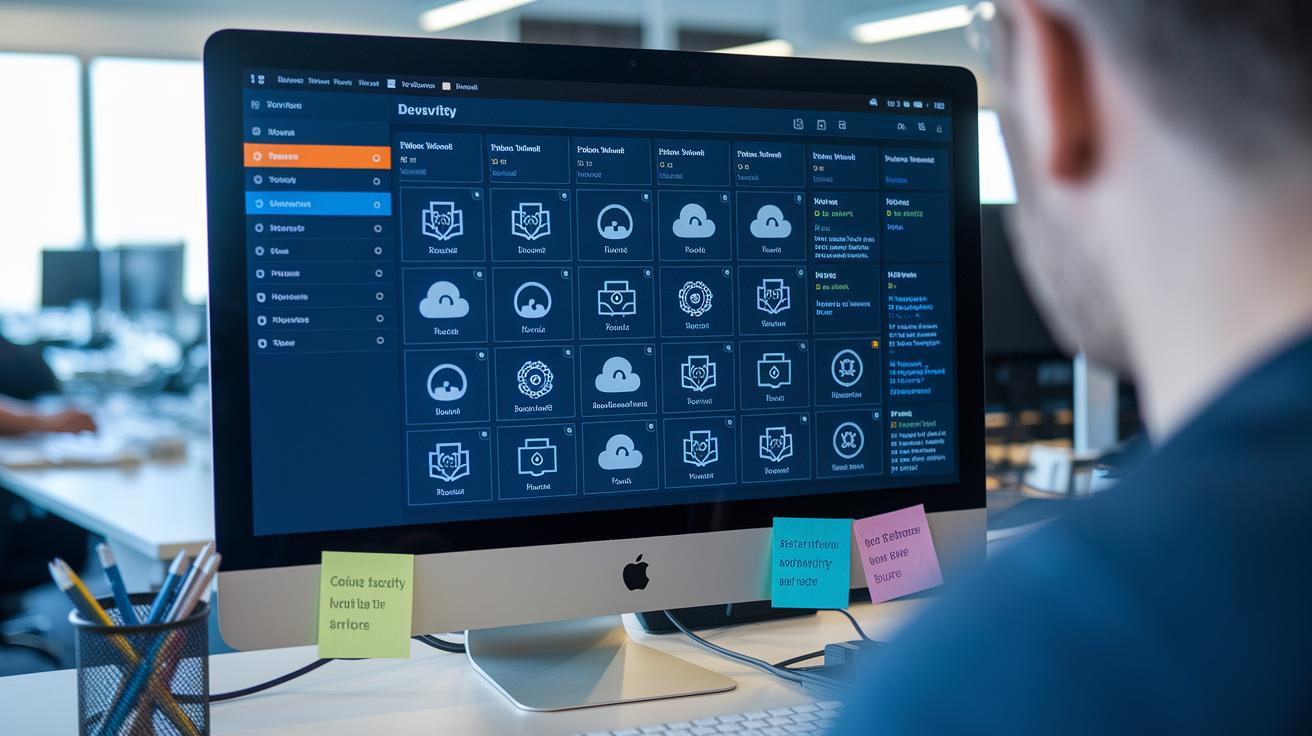
Keeping your data secure across different cloud setups might seem tricky, but with a clear strategy, it’s totally manageable. Imagine gathering all your security rules and monitoring tools into one friendly dashboard, that’s how you can keep an eye on everything while staying nimble in our fast-changing digital world.
By automating those routine checks and inserting security early into your code development, you’re building a system that’s ready to tackle threats on public, private, or hybrid clouds. It’s like setting up a series of quick safety nets that catch issues before they snowball.
Here are some practical steps to safeguard your cloud environment:
- Policy Automation – Use smart automation tools to consistently enforce security rules across every cloud space, cutting down on manual errors.
- Segmentation – Break your network into smaller zones with micro-segmentation, security groups, and network ACLs so any breach stays contained.
- Secure DevOps – Build security into every step of your CI/CD process with automated scans and regular configuration audits.
- Configuration Management – Stick with strict secure configuration protocols for platforms like AWS, Azure, Google Cloud, and private clouds to keep settings uniform.
- Centralized Logging – Combine logs from all your platforms into one system, which makes spotting unusual activities much easier.
- Workload Isolation – Keep workloads separated using host-based firewalls and tight network controls to limit exposure if something goes wrong.
- Multi-Cloud Governance – Set up a clear framework that monitors and enforces security rules across all your cloud platforms, ensuring compliance every step of the way.
These measures build a robust multi-cloud strategy that empowers you to handle risks on the fly and keep your resources secure in an ever-evolving tech landscape.
Compliance Benchmarks and Regulatory Standards for Cloud Environments
Big cloud providers typically secure certifications like GDPR, NIST 800-53, PCI 3.2, and HIPAA to show they meet industry standards. In a shared responsibility model, they lock down the hardware and physical infrastructure, while you take care of setting up your workloads and managing your data in a compliant way. It’s a real team effort where both sides play vital roles.
Cloud environments are ever-changing, so relying on a once-in-a-while review just isn’t enough. Instead, modern systems use real-time alerts and automated tools to catch misconfigurations the moment they occur, shortening the time your systems might be vulnerable. With detailed audit logs and clear dashboards, you can easily track your regulatory status and never lose sight of your compliance checklist.
Many organizations follow a simple five-step process to stay on track. They start by assessing their current configurations against the necessary standards. Then, they integrate automated monitoring tools, keep a continuous check on policy adherence, review audit dashboards, and adjust configurations as new regulations come into play. This systematic approach makes it easier to enforce compliance consistently in dynamic cloud environments.
Threat Detection and Incident Response in Cloud Security

Detection Techniques
Imagine keeping a constant eye on your cloud setup as if you were a vigilant friend watching over your digital space. Continuous monitoring forms the backbone of a strong cloud defense by scanning for odd behaviors and alerting you to anything that feels off. For instance, log aggregation collects records from various parts of your system so you see the full story. Anomaly detection works like a friendly nudge when activity diverges from what’s typical, hinting that something might be wrong. Network telemetry digs into traffic details to spot unusual movements, while threat intelligence pulls in external data feeds to warn you about potential hazards before they strike. And then there’s sandbox analysis, which safely isolates suspicious actions, letting you investigate without risk to your whole setup.
Response Procedures
When a threat surfaces, a smart incident response plan is your best buddy. Think of it as a step-by-step guide where predefined playbooks and clear role assignments speed up how your team tackles issues. Cloud-native monitoring tools can even sync with threat intelligence sources, triggering real-time defenses like IPS/IDS or deep packet inspection, almost like having an automatic safety net. Responding to an incident often follows a well-practiced routine: first, identify the threat to understand its nature; then, contain it to stop further damage; next, eradicate the malicious element completely; afterwards, recover your systems so everything is back on track; and finally, review what happened to bolster your defenses for the future. This sort of systematic approach not only minimizes disruption but also continuously makes your cloud environment more secure and ready for whatever comes next.
Advanced Encryption and Identity Governance for Cloud Data
Encryption is at the heart of keeping cloud data safe. We use solid methods like AES-256 to protect stored data, what we call data-at-rest, and TLS 1.3 to keep information secure as it travels between systems. Think of it like a high-security bank vault with a top-notch combination lock, ensuring that even if someone tries to eavesdrop, your data remains unreadable. This approach builds trust and keeps digital infrastructures confidential.
Managing those encryption keys is just as crucial. Companies often turn to Hardware Security Modules or specialized key management services to handle this sensitive task. Automated key rotation, for example, is like regularly updating a safe’s combination, making it much harder for any would-be intruder to gain access while keeping things running smoothly.
Controlling who can access your vital information is another key part of the puzzle. By using practices like least-privilege IAM policies, along with Role-Based and Attribute-Based Access Control, organizations can carefully decide who sees what. Picture it like handing out custom badges that open only certain doors, limiting potential risks if someone’s credentials get into the wrong hands. And when you add federated identity protocols like SAML and OAuth into the mix, authentication becomes more centralized and straightforward across different applications.
Finally, combining detailed access controls with multi-factor authentication means that every entry point gets a thorough check. This synergy of strong encryption and robust identity governance creates a resilient shield around cloud data, ensuring that every part of the digital ecosystem stays secure.
Implementing Zero Trust and Access Controls in Cloud Security

Zero Trust first emerged in 2010 as a game-changing idea for cloud security. The core concept is straightforward: don’t automatically trust anyone or anything. Instead, check every user, device, and application every single time they try to get access. This approach shakes up the old, perimeter-focused mindset by making sure every access request is verified no matter where it comes from.
The Zero Trust model stands on six key principles. First, it uses policy-based identity and access management so that every person’s identity is confirmed. Second, micro-segmentation breaks the network into smaller parts to help contain any breaches. Third, logical network isolation, using tools like VPCs or vNETs, keeps different areas separate. Fourth, API broker solutions step in to manage and monitor API calls. Fifth, identity becomes the main barrier protecting sensitive data. And finally, continuous monitoring keeps an eye out for unusual behavior. Together, these pillars work like a team to stop unauthorized movement within your network and ensure only approved services reach your critical assets.
To put Zero Trust into practice, consider these steps:
- Define detailed policies that validate each access request in real time.
- Set up strict network segmentation using micro-segmentation and logical isolation.
- Integrate API broker solutions to manage calls and strengthen identity-based defenses.
Each of these steps plays a vital role in boosting your security by enforcing a no-trust-by-default rule throughout your cloud environment.
Automated Monitoring and Disaster Recovery Strategies for Cloud Platforms
Monitoring Architecture
Centralized monitoring is the backbone of cloud security. By linking up services like AWS CloudWatch, Azure Monitor, or Google Stackdriver, you gather logs from all your cloud components into one neat hub. This unified view helps you set clear alert limits, so if something unusual pops up, you’re quickly clued in. And when you integrate it with SIEM, which, simply put, connects those events into a coherent signal, it turns into an automatic early-warning system. Imagine receiving an alert at the exact moment unusual log patterns cross a safe line; it’s like having a digital guard keeping an eye on everything.
Crafting an effective monitoring setup means you’re always in the loop with real-time data and smart analysis. It becomes easier to notice and react to oddities, which minimizes downtime and keeps your infrastructure strong. Plus, with automated pipelines rolling out regular security updates, every part of your cloud stays ready against the latest cyber risks.
DR Framework
| Scenario | RTO | RPO |
|---|---|---|
| Region Failure | 30 mins | 10 mins |
| Data Corruption | 1 hour | 15 mins |
| Ransomware Attack | 2 hours | 5 mins |
Continuous Improvement and Future Trends in Cloud Security

Cloud security is rapidly taking on a new shape. Today, integrating data perimeters with multi-account architectures not only helps lower risk exposure but also calls for careful, detailed configuration. Modern authentication is moving away from long-lived credentials to newer methods like IMDSv2, and experts expect that nearly half of all implementations will enforce this shift by 2025. This change builds a stronger framework where every access request gets thoroughly checked, aligning security measures with the ever-changing demands of cloud environments.
Container security is also getting a lot of attention, especially within ecosystems like Kubernetes, service meshes, and specially hardened microservices designs. With the rise of AI-driven anomaly detection and automated remediation, we’re seeing threats being identified and neutralized almost instantly. This proactive, forward-thinking approach not only secures each container more effectively but also keeps overall cloud defenses nimble and ready to tackle emerging challenges.
Final Words
In the action, our post tackled key aspects of cloud security, from defining its core pillars to implementing Zero Trust access and monitoring strategies. We broke down data protection, compliance standards, threat detection, encryption, and disaster recovery into actionable steps, making the complex world of cloud security more approachable.
The insights shared help clarify how integrated best practices and modern authentication measures work together. Embrace these methods confidently, knowing that smart cloud security decisions pave the way for smoother tech operations every day.
FAQ
What are cloud security tools?
Cloud security tools refer to software and services designed to protect cloud environments by monitoring data, enforcing policies, and detecting potential threats in real time.
What is cloud security certification?
Cloud security certification validates your skills in securing cloud infrastructures, teaching you best practices in data protection, access management, and regulatory compliance.
What are cloud security jobs?
Cloud security jobs involve roles like engineer, analyst, or architect focused on implementing security measures, monitoring systems, and managing risks in cloud environments.
What is a cloud security course?
A cloud security course provides training on protecting data and applications in the cloud by covering topics such as encryption, network safeguards, and identity management.
What influences cloud security salary?
Cloud security salary reflects the growing demand for skilled professionals and varies by role, experience, and location, often offering competitive compensation in tech industries.
What can I learn from a cloud security book?
A cloud security book offers insights, best practices, and foundational knowledge to help you understand and implement strategies that protect data and systems in cloud environments.
What is a cloud security roadmap?
A cloud security roadmap outlines key steps for securing cloud systems, including adopting best practices, continuous monitoring, and aligning with regulatory standards.
What does cloud security Google involve?
Cloud security Google involves the suite of security solutions and certifications provided by Google Cloud, emphasizing robust data protection, access control, and monitoring across their platform.
What does cloud security mean?
Cloud security means protecting data, applications, and services hosted in the cloud using methods like encryption, identity management, network safeguards, and threat detection.
What are the pillars or types of cloud security?
The pillars of cloud security typically include data protection, identity management, network security, and threat detection, forming a framework to secure cloud-based systems and applications.
Do I need cloud security?
You need cloud security if you store or process data in the cloud to maintain confidentiality, prevent unauthorized access, and comply with various regulatory requirements.