

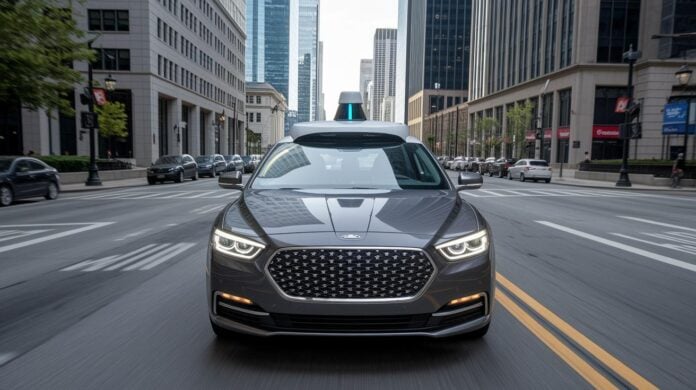
Have you ever stopped to think about how cars can drive themselves or how drones zip effortlessly through city streets? Unmanned vehicle technology is rapidly transforming our daily lives by changing the way we move and work. These clever systems rely on smart sensors and real-time data, allowing them to make split-second decisions that enhance safety and boost efficiency.
They are integral to a variety of tasks, from drone deliveries to agricultural mapping and even critical public safety operations. In this article, we break down the essential elements of these systems and explore how they are paving the way for technical advances that simplify life for both communities and businesses.
Comprehensive Overview of Unmanned Vehicle Technologies
In the world of unmanned vehicles, there's an exciting range of innovations at work. Businesses rely on advanced sensors, state-of-the-art tools, intuitive software, and reliable services to power everything from drone delivery and energy management to public safety, agricultural mapping, and infrastructure monitoring. These technologies boost efficiency while making operations safer and more precise. Ever wonder how rapid decisions are made? Companies often spotlight systems that combine multiple sensors with real-time data processing to deliver accurate, on-the-spot answers.
Market needs are as varied as the groups they serve, public agencies, private companies, and large industrial operations all demand different solutions. To address this, providers offer everything from equipment sales and leasing to factory-certified repairs, custom program development, and even specialized fleet management. Each model is designed to keep systems mission-ready and running at their best, even under tough conditions.
Top-tier systems like the DJI Matrice Series, Autel EVO II Family, and Ghost Robotics Vision 60 Q-UGV really highlight how far unmanned vehicle technology has come. These platforms feature smart sensor integration and advanced autonomous flight capabilities that perform brilliantly in both bustling urban areas and rugged, remote terrain. With more than a decade of experience and strict regulatory compliance behind them, these support offerings, from sales and leasing to rapid, certified repairs, reaffirm a dedicated commitment to delivering resilient and high-performing unmanned solutions.
Core System Components in Unmanned Vehicle Technologies
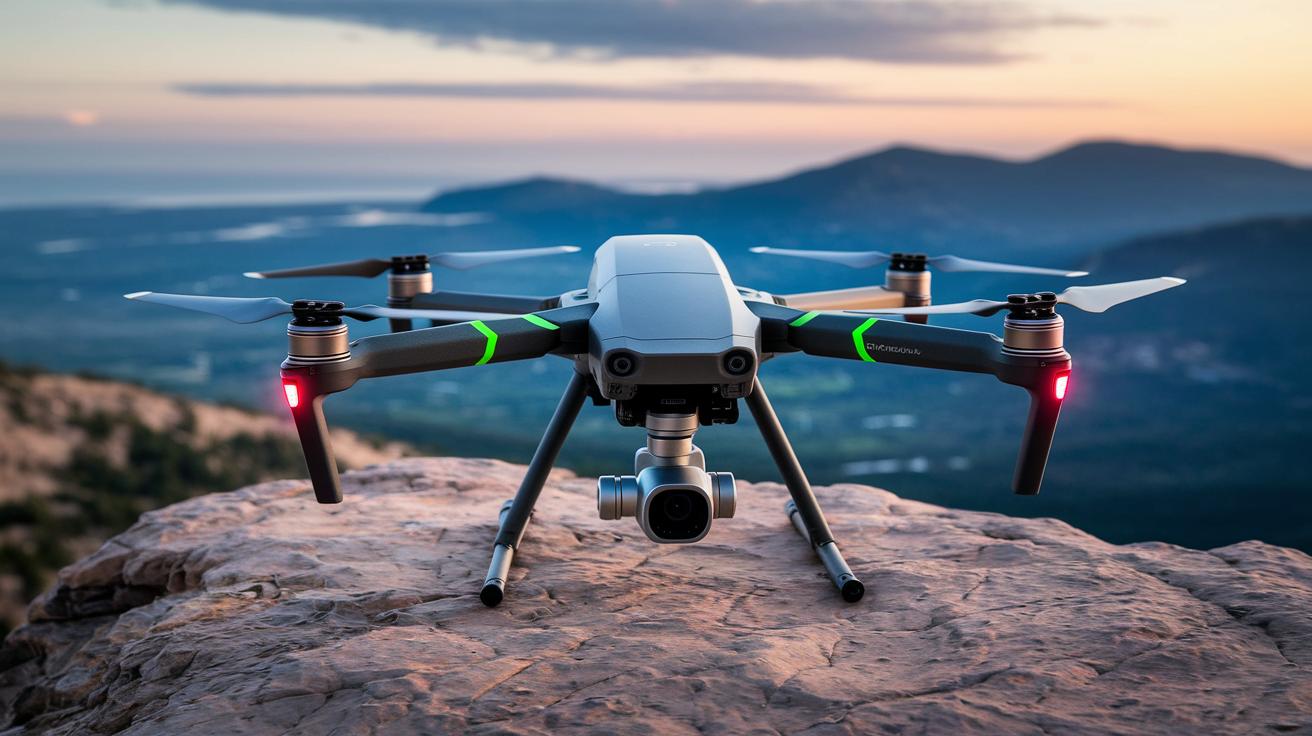
Unmanned vehicles rely on a smart blend of systems working seamlessly together. At the heart of this setup is an AI-driven autopilot that partners with digital navigation aids to guide the vehicle with precision, even in tricky weather or terrain. These systems use Pixhawk-based flight computers that deliver smooth control, making them robust enough for all conditions. It’s like having a trusty co-pilot who doesn’t get flustered when things heat up.
Alongside the autopilot, integrated sensor platforms play a crucial role by capturing your surroundings in great detail. Imagine having a set of high-tech eyes, LiDAR, infrared, and RGB cameras, that constantly feed accurate environmental data into the system. This rich data stream helps build real-time maps and spot obstacles instantly, much like assembling a detailed puzzle on the fly.
Communication is equally vital. Secure RF and broadband telemetry links keep unmanned vehicles connected to ground stations, ensuring continuous data exchange. Digital navigation aids, like GNSS modules, further enhance this setup by offering pinpoint location accuracy. Together, these components work in harmony so that unmanned systems can handle complex tasks reliably and responsively.
| Component | Primary Function |
|---|---|
| Autopilot Module | Drives AI-enabled control and precise maneuvering |
| Sensor Suite | Provides environmental data for mapping and detection |
| Communication Link | Ensures constant and secure data exchange |
Yet, integrating all these diverse modules isn’t without its challenges. Engineers must carefully calibrate sensors with the autopilot system, and keep RF communication free from interference, a task that involves a lot of testing and real-world simulations. This iterative process ensures every component syncs perfectly, delivering a reliable and responsive performance that you can trust in any situation.
Advancements in Autonomous Flight Systems within Unmanned Vehicle Technologies
AI-powered autopilots have really evolved, and the DJI Matrice 30 Series is a perfect example. These systems now come with onboard AI that makes them feel almost human in their response, imagine the quick reaction of a seasoned pilot paired with new fusion technology that handles complex maneuvers with ease. The integration of machine learning means smoother transitions and more intuitive flight control, setting a fresh, high bar for next-generation airborne robotics.
Stereo-vision and radar-based sensors, teamed with smart collision avoidance algorithms, give unmanned vehicles a keen sense of their surroundings. It’s like having a built-in guardian that constantly scans for obstacles and adjusts the flight path in real time. This blend of technology not only reduces the risk of mishaps but also optimizes the route during intricate operations, ensuring reliability even in challenging environments.
Real-world applications show these advancements in action. Take the Autel EVO Max 4T, for example, it combines high-resolution thermal and standard imaging with low-latency data links for tactical use. With hybrid-electric propulsion boosting endurance, these UAVs offer extended flight times and agile performance. It’s a clear sign of how merging innovative robotics with advanced sensing transforms diverse mission outcomes.
Industry Applications and Operational Scenarios for Unmanned Vehicle Technologies
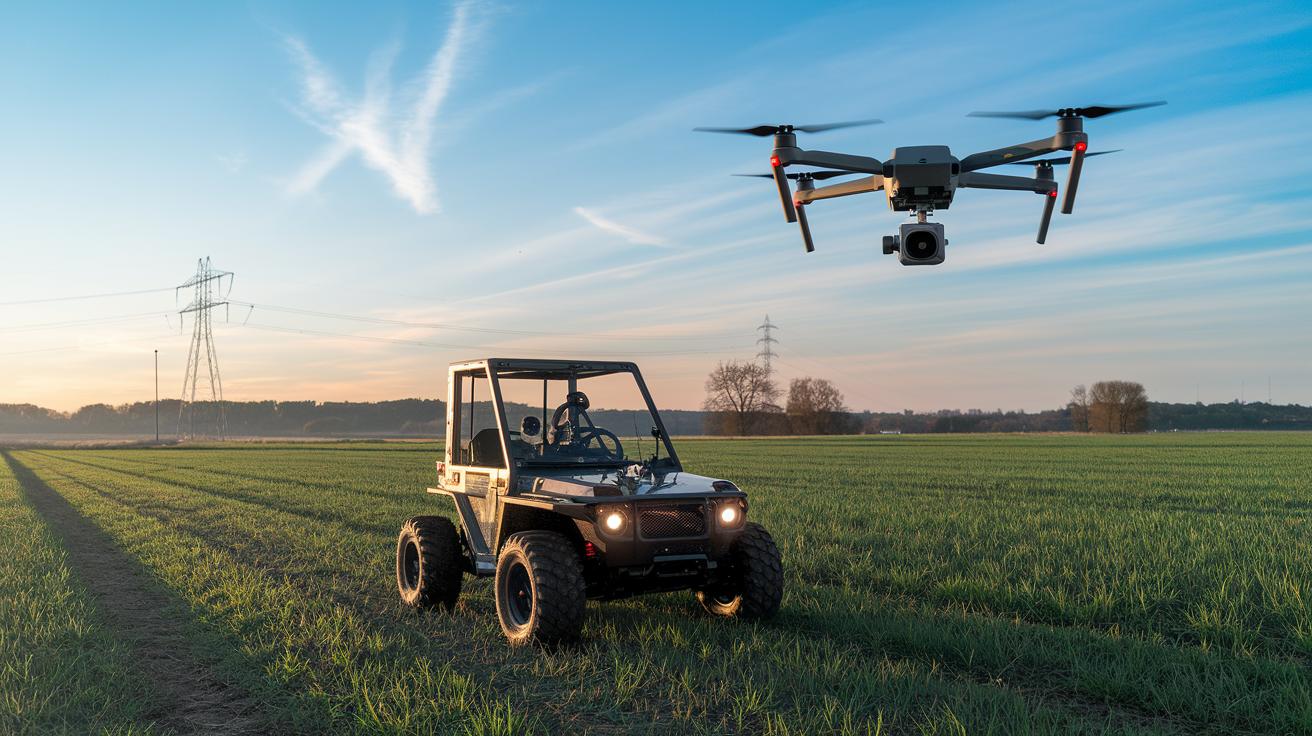
Unmanned vehicles are more than just high-tech gadgets, they’re practical workhorses reshaping industries from public safety to agriculture, mining, and energy. These tools help tackle everyday challenges like field monitoring, infrastructure checks, environmental mapping, and emergency management, all while keeping operations safer and more efficient.
Take a look at some real-world uses:
- Law enforcement uses these systems for effective surveillance.
- Energy teams inspect critical utility infrastructure.
- Farmers leverage them for mapping fields and analyzing crops.
- Mining operators perform topographic surveys to detect terrain shifts.
- Disaster response and search & rescue teams enhance their mission readiness.
- Security patrols use counter-UAS technologies to maintain safety.
One striking example comes from a municipal sUAS program that completely transformed how local agencies handle emergencies and monitor critical infrastructure. Local public safety teams now use a mix of aerial support and ground platforms to collect real-time, high-resolution images, helping them quickly spot potential dangers after disasters. Energy inspectors rely on equipment like the DJI Matrice 400 to verify that power lines and substations are running safely. Meanwhile, precision agriculture has taken a leap forward with multispectral imaging systems from the DJI Matrice Series, which provide detailed data that informs more effective planting and resource management. In mining, systems like the Freefly Astro track topographic changes to reveal potential hazards, and disaster responders turn to rugged solutions such as the Ghost Robotics UGV for difficult, high-stakes rescue missions.
In short, unmanned technology is making a real difference across diverse sectors by adapting to unique field conditions and boosting operational efficiency.
Regulatory and Security Considerations in Unmanned Vehicle Technologies
Unmanned vehicle systems need to meet strict certification and hardware standards to operate safely and reliably. For instance, most of these systems follow FAA Part 107 guidelines and incorporate NDAA-approved hardware. UTM systems monitor vehicle movements, while secure mission networks link every component, ensuring a well-tested and dependable foundation.
Protecting data and ensuring system integrity are achieved with robust encryption methods like AES-256, a trusted way to secure sensitive information. Plus, anti-drone countermeasures shield these networks, providing end-to-end encrypted telemetry so that interference or tampering is nearly impossible. This careful attention means sensitive operational data stays confidential, even when challenges arise.
On a global scale, different regulations add extra layers of complexity and chance for refinement. Domestic systems adhere to strict rules, while international operators often follow EASA guidelines and various export control policies. In practice, this ensures that each region’s safety standards are met, enabling unmanned vehicle networks to perform securely and reliably worldwide.
Future Trends and Emerging Innovations in Unmanned Vehicle Technologies
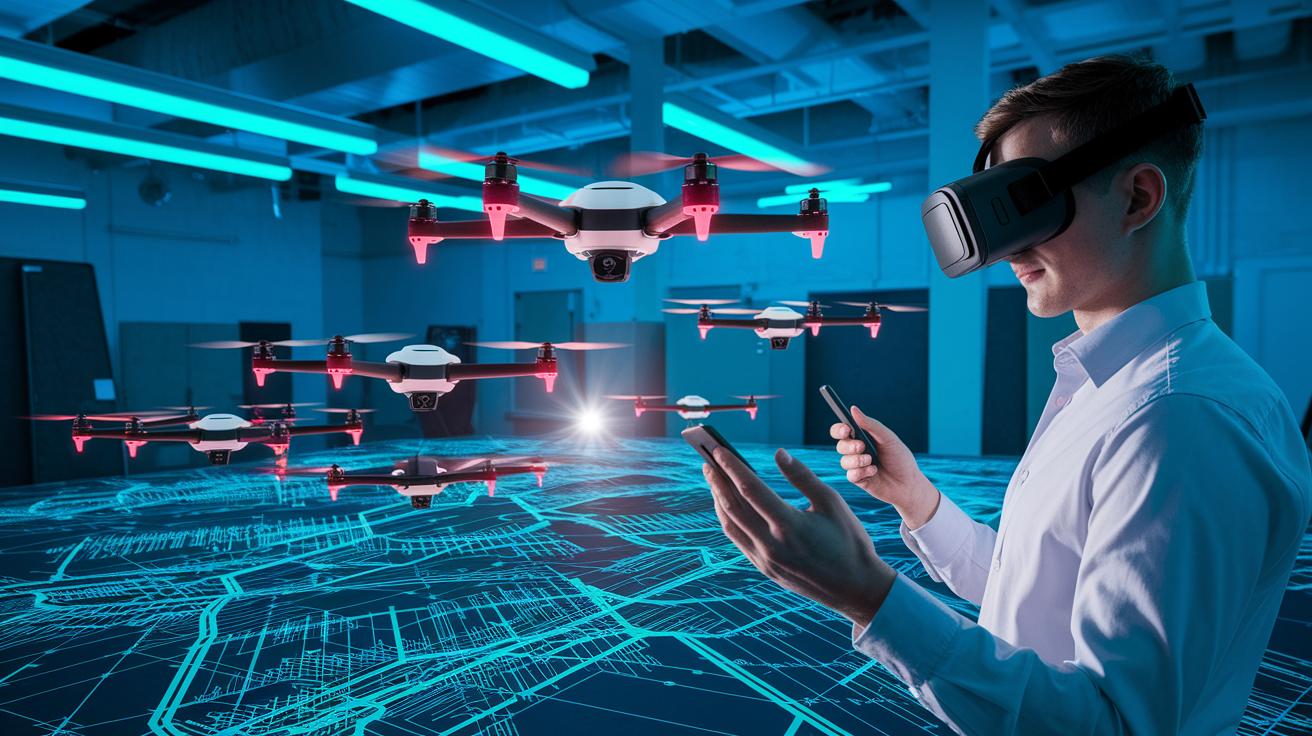
Unmanned vehicle tech is pushing boundaries like never before. Researchers are busy exploring ideas such as swarm autonomy, 3D mapping with SLAM (that’s a method for creating digital maps using sensors), and edge computing for onboard analytics. They’re also diving into innovative VR/AR control interfaces and designing modular payload systems. Ever wonder how cutting-edge initiatives like hydrogen-powered UAV hubs and digital twin simulations fuel creativity? These projects are reshaping design and functionality in exciting ways.
Energy and propulsion are stepping into a fresh era. Hybrid systems are mixing traditional methods with sustainable energy to deliver cleaner, more efficient power. Projects like DMR’s Louisiana initiative, set to launch in 2025, highlight an industry committed to greener operations. This means longer endurance and enhanced reliability, setting the stage for operations that are both resilient and environmentally friendlier.
On the operations side, AI is transforming mission planning for unmanned vehicles. Machine learning helps optimize flight paths and adjust system responses in real time. Tools like digital twin simulations allow teams to perfect missions with precise rehearsals and ongoing performance tweaks. This smart integration of AI, simulation, and adaptive planning gives unmanned systems the confidence to tackle diverse conditions effectively.
Final Words
In the action, this article explored unmanned vehicle technologies, breaking down core system components, autonomous flight systems, industry applications, and regulatory standards. It described AI autopilots, sensor fusion, secure communication links, and real-world operations in sectors like public safety and agriculture.
The discussion combined practical measures with upcoming innovations to drive tech adoption and operational confidence. Embracing such insights can simplify complicated tech choices and energize a forward-thinking approach in a swiftly changing world.