

Have you ever considered that a TV might light up your room like a burst of sunshine? In our review of 2023's standout 4K TVs, we dive right into showcasing models that deliver brilliant picture quality along with smart features. We put these TVs to the test in both everyday settings and the lab, checking how well they perform when it really counts. Here, you’ll see how aspects like brightness, contrast, and vibrant colors can completely transform your home viewing experience. Stick with us as we uncover which bold pick might just change the way you watch your favorite movies and shows.
Best 4K TV Models of 2023: Expert Rankings and Highlights
Our 2023 review brings together clear, in-depth insights on ultra HD performance and smart TV features, making it easy for you to find a display that fits your lifestyle. We’ve carefully tested these TVs in both controlled labs and everyday settings to ensure you get the full picture.
Here’s our friendly rundown of the top five models:
-
LG G3 OLED – Now available for about $1,700 after discount. This model really stands out with its Alpha 9 AI Gen 7 processor and an impressive 1,897 nits peak HDR brightness that creates vivid, infinite contrast. Just a heads up, using it for long periods with static images could risk burn-in.
-
Samsung QN85C (2023) – Priced around $2,200 or more, this mini-LED wonder shines with a striking 2,086 nits brightness. It performs beautifully even in bright rooms, though you might notice a slight halo effect around very bright objects.
-
LG B3 OLED (2023) – For roughly $1,000, this entry-level model offers a solid 656 nits peak HDR brightness for eye-catching visuals. It’s an excellent value pick, even if it doesn’t pack every high-end feature.
-
Hisense U6K (55″) – Under $1,000, this TV uses a mini-LED backlight that hits 580 nits across the full screen and 651 nits in a narrow window. It delivers dynamic, colorful images, but its speakers might feel a bit underwhelming.
-
Samsung QN900C (2023) – A top-tier 8K option for those looking to future-proof their setup, though keep in mind that native 8K content is still quite limited.
Panel Technology Benchmarks: OLED vs QLED vs Mini-LED in 2023 4K TVs
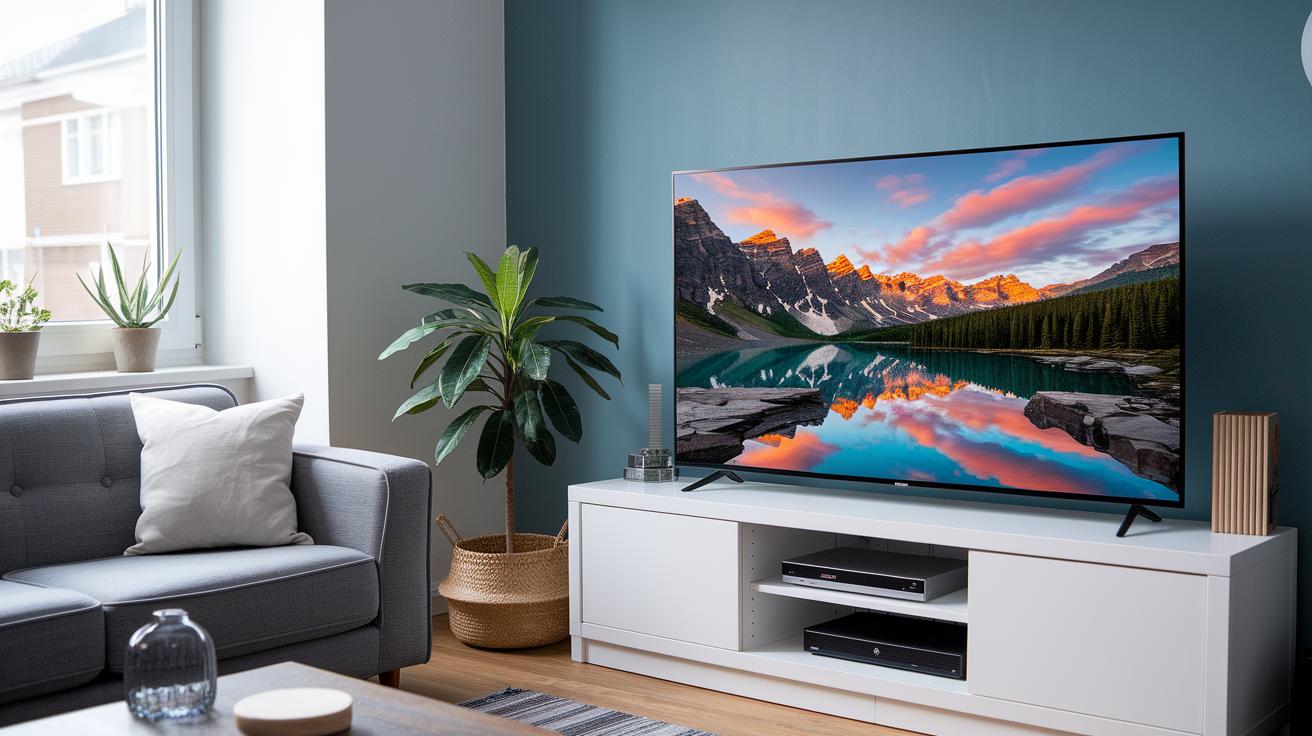
Modern displays are all about pushing the edge of picture quality, and recent tests reveal that each panel type has its own strengths. The LG G3 OLED, for example, reaches a peak brightness of 1,897 nits and serves up infinite contrast along with truly perfect blacks. Sure, that clarity is impressive, but keep in mind that showing static images too long might risk burn-in.
Over in the Mini-LED camp, Samsung’s QN85C stands out with a top brightness of 2,086 nits. It handles bright rooms really well, even if you might notice a slight halo around luminous spots. Then there’s the Hisense U8, which hits around 2,000 nits. Its rich, bold colors make for an immersive experience, though you might want to recalibrate it a bit since it tends to oversaturate straight out of the box.
| Panel Type | Peak Brightness (nits) | Pros | Cons |
|---|---|---|---|
| OLED (LG G3) | 1,897 | Infinite contrast; perfect blacks | Burn-in risk |
| Mini-LED (Samsung QN85C) | 2,086 | Strong contrast | Slight haloing |
| QLED (Hisense U8) | ~2,000 | Rich colors | Oversaturation needs calibration |
These benchmarks break down the key performance aspects, brightness, contrast, and color accuracy, helping you decide which display aligns best with your viewing needs.
Smart Interface and Connectivity in 2023 4K TV Review
Operating System Performance
Each smart TV operating system brings its own flavor to the table. LG’s updated webOS sports a fresh launcher and quicker firmware updates, so switching between apps feels nearly effortless. Samsung’s Tizen offers a vast app library and handy voice commands through Bixby, though sometimes there’s a slight delay when you’re in a rush. Roku TV takes a no-fuss approach with a simple, clean layout, which might feel a bit plain if you’re after a richer collection of apps. And Google TV, complete with Google Assistant, delivers smart suggestions that almost feel like a friendly nudge toward your next favorite show.
App Ecosystem and Voice Assistant Integration
The differences in app ecosystems really stand out among these platforms. With LG’s webOS, you get access to a wide variety of streaming services that load fast thanks to efficient system updates. Samsung’s Tizen not only covers a broad app selection but also makes activating voice commands with Bixby a smooth experience. Roku TV sticks to basics by providing easy-to-find apps, even though it might not offer as many premium options. Google TV shines with its built-in Google Assistant, which makes remote commands and smart-home controls feel effortless, like having a digital partner that smoothly transitions you from streaming to live TV.
Connectivity Options Overview
Modern connectivity features add a lot to these TVs’ overall performance. Many models now come with HDMI 2.1 ports, take the LG C4, for example, which has four ports that support 4K at 120Hz, perfect for high-demand gaming or video streaming. eARC brings crisp audio for Dolby Atmos setups, while Bluetooth 5.0 makes pairing with wireless sound systems a breeze. Reliable Wi-Fi and solid LAN ports ensure that you stay connected and in control, making sure the viewing experience is as bright and bold as the picture on screen.
Gaming and Motion Handling in 2023 4K TV Review

Refresh Rate and VRR
Refresh rates really make a difference when you're gaming. Take the LG C4 OLED as an example, it runs at 4K with a native 120Hz refresh rate, and it can even hit 144Hz with a PC input, making your gameplay feel super smooth. The Hisense U8QG goes a step further by offering a 4K refresh at 165Hz with FreeSync Premium Pro, though you might notice a slight color shift if you're not looking straight on. And then there’s Samsung’s QN90F, which uses HDMI 2.1 to bring VRR to life, perfectly syncing with consoles like the Xbox Series X and PS5.
Input Lag Measurements
When every millisecond counts, low input lag is key. In Game Mode, the LG C4 OLED impressively registers only 10 ms delay, so your commands hit almost instantly, a huge benefit in tight, competitive matches. Other top models deliver similarly low lag, with most staying under 10 ms. These improvements show that 2023’s 4K TVs are really honing in on reducing delays, which means a better, more responsive gaming experience for everyone.
Motion Smoothing and Judder Control
Of course, smooth motion is just as important as fast refresh rates. Samsung’s Motion Xcelerator, for example, does a great job of eliminating judder, ensuring fast scenes flow without any hiccups. Even though all these models support variable refresh rates on modern consoles, each uses its own motion-processing engine to handle rapid movement. This careful attention to motion not only enhances HDR picture quality but also keeps your gaming visuals consistently immersive and enjoyable.
Audio Quality in 2023 4K TV Review: Speaker Systems and Modes
Modern 4K TVs are really upping their audio game, and our tests show it clearly. The Hisense U8 comes with a 4.1.2-channel speaker setup that fills your room with immersive sound, though it can sometimes distort during those louder, action-packed scenes. This reminds us that even the most robust systems might need a bit of calibration now and then to hit their peak performance. In one test, we discovered that even a top-tier 4.1.2-channel array can struggle during high-energy moments, much like a concert speaker pushed to its limits.
The LG G3 OLED offers a simpler 2.2-channel configuration delivering 40 W of output. Its real strength lies in clear mids and crisp dialogue, though the bass might feel a bit underwhelming compared to more substantial setups. Many models now support eARC-enabled Dolby Atmos pass-through, which makes it a breeze to integrate with soundbars or AV receivers for an enhanced overall audio experience.
Voice commands via platforms like Google Assistant and Bixby make adjusting volume and EQ presets super convenient. Whether you're settling in for a quiet drama or gearing up for an intense sports match, the sound adapts on the fly to match your viewing mood.
Design, Build, and Value in 2023 4K TV Review

Modern 4K TVs aren’t just about stunning visuals, they’re crafted to seamlessly blend into today’s stylish homes. Manufacturers are hitting that sweet spot by combining exceptional picture quality with designs that feel at home in any modern living space. For example, the Samsung QN85C, starting at about $2,200, features a robust metal stand along with a zero-gap wall mount option. This smart design choice not only looks sleek but also provides the stability and versatility you need to set up your TV just right.
Even more affordable models are holding their own with a focus on minimalism and strong performance. Take the LG B3 OLED, which comes in at roughly $1,000. Its ultra-thin profile makes it perfect for compact spaces, and the simple pedestal design emphasizes both functionality and style. This model shows that you can still enjoy the latest design trends without stretching your budget.
If you’re keeping an eye on your finances, budget-friendly options like the Hisense U6N 65″, priced around $550, deliver solid performance with straightforward design. It might not have all the premium materials you find in high-end models, but its durable plastic stand and easy-to-use features make it a reliable choice for everyday viewing.
Most of these TVs come with a standard 1-year warranty, and many manufacturers offer extended plans up to 3 years. That extra peace of mind is especially valuable when investing in a high-end model. In short, the 2023 4K TV market offers a wide range of designs and builds that cater to different budgets, all while providing excellent cost-performance ratios.
4K TV Buying Guide 2023: What to Consider Before You Buy
When choosing your ideal TV for your room, start by thinking about how far you sit from the screen. If you’re too close to a large display, you might notice each pixel. But with a smaller screen, you could end up straining to see details. Also, consider the type of panel. For instance, VA panels deliver deeper blacks and better contrast, while IPS panels keep colors true and let you enjoy a wide viewing angle.
Connectivity features are just as important. Look for HDMI 2.1 support if you game or use high-bandwidth devices because it handles heavy data smoothly. Check that your TV comes with eARC so you can easily connect it to soundbars or AV receivers for top-notch audio. And don’t forget steady Wi-Fi for seamless streaming. Comparing smart operating systems can help you pick one with the apps you love.
Audio setup matters too. Decide early if you’ll rely on the built-in speakers or if an external sound system is more your style. Many TVs now include professional calibration options like ISF modes that fine-tune contrast and color temperature for a personalized viewing experience. Lastly, pay attention to energy consumption, most TVs use between 100 and 200 W, and ECO modes can help you reduce power usage.
Final Words
In the action, our 4K TV review 2023 guided you through top models, panel benchmarks, smart connectivity, immersive gaming, and design nuances. We broke down each aspect so you can weigh strengths and imperfections and make sound tech decisions.
Every section of our 4K TV review 2023 offers clear, actionable insights that simplify complex choices. With detailed yet friendly analysis, our 4K TV review 2023 empowers you to move forward with confidence and a bright outlook.
FAQ
What does the best 4K TV review 2023 cover?
The best 4K TV review 2023 covers top models—like LG G3 OLED, Samsung QN85C, and LG B3 OLED—by highlighting performance details, pricing, and design features to help you make an informed choice.
What are the downsides of a 4K TV and is it worth buying?
The downside of a 4K TV can include issues such as burn-in risks for OLED screens and calibration needs, but overall, the enhanced resolution and immersive visuals typically make it a worthwhile purchase.
How do 4K, QLED, and OLED TVs compare?
The comparison between 4K, QLED, and OLED TVs shows that while OLED delivers perfect blacks and infinite contrast, QLED models generally offer richer brightness, helping you select based on your viewing environment and preferences.
What are the top smart TV brands and which models offer the best value?
The top smart TV brands—such as Samsung, LG, and Sony—feature models that combine quality performance, smart features, and competitive pricing, ensuring a range of options that suit both premium and budget-minded consumers.
What is the best 4K TV for 2024?
The best 4K TV for 2024 is expected to incorporate advanced display technologies and smart interfaces, offering improved brightness and connectivity, as manufacturers build on the strong performance benchmarks of previous models.
How do high-end models like Samsung S90D, LG OLED evo, and Sony A95L compare?
High-end models, including the Samsung S90D, LG OLED evo, and Sony A95L, differ in their panel technology and smart features—each providing unique strengths in color accuracy, brightness, and user interface to suit diverse viewing needs.
What should be considered when choosing the best 4K TV 55 inch option?
The best 4K TV 55 inch option should balance screen size with excellent HDR brightness, reliable panel performance, and smart features, ensuring that the model fits your space and provides a satisfying viewing experience.